

Brazeal Studio is an ethical fashion and lifestyle brand offering handcrafted bags, apparel, home décor, and custom designs, blending traditional craftsmanship with contemporary aesthetics to serve global markets with quality, sustainability, and art...
- (+91) 9899074899
- brazealstudio@gmail.com
- 68, North West Delhi, North West Delhi, Delhi, India. 110034
© 2020 BRAZEAL STUDIO. All Rights Reserved
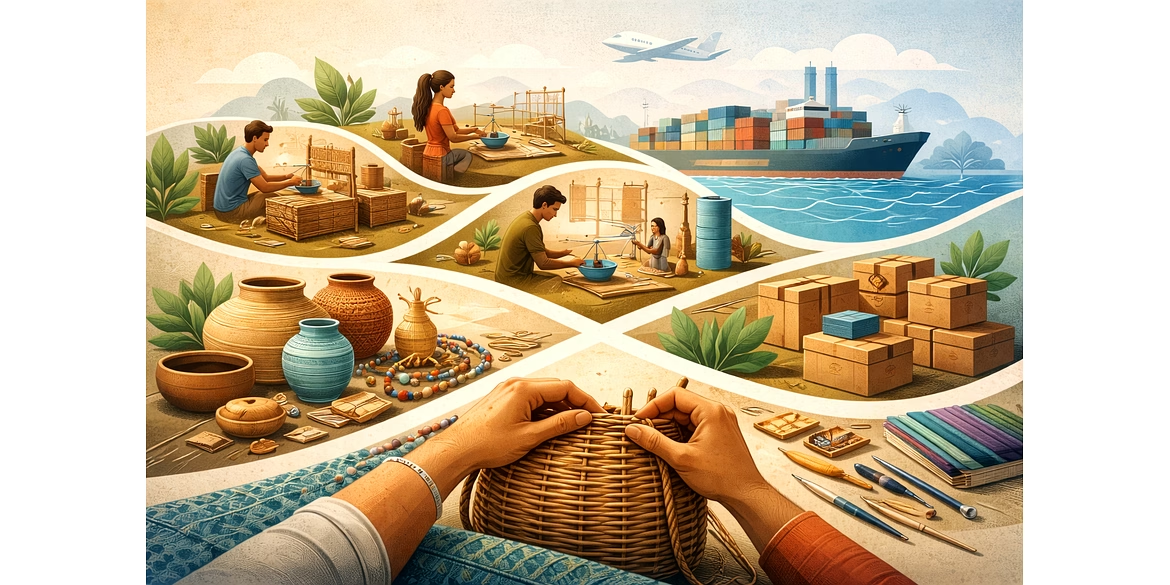

Handcrafted products are gaining strong demand across global markets as buyers and consumers seek authenticity, sustainability, and meaningful design. For B2B importers, sourcing handcrafted products offers differentiation, storytelling value, and long-term brand strength—when approached with the right strategy.
From fashion accessories and bags to home décor and handicrafts, handcrafted sourcing enables importers to build unique product assortments with ethical and cultural value. This guide outlines everything B2B importers need to know when buying handcrafted products for international markets.
Understand What “Handcrafted” Means in B2B Trade
Handcrafted products involve skilled manual techniques such as embroidery, weaving, beading, carving, pottery, or surface embellishment. In B2B sourcing, handcrafted does not mean inconsistent or unscalable.
Many suppliers combine artisan skills with structured production systems, standardized workflows, and quality controls to ensure consistency, reliability, and commercial viability for international buyers.
Identify the Right Product Categories
Popular handcrafted categories for B2B importers include fashion accessories, bags, home décor, apparel, handicrafts, and seasonal décor. Each category offers different margin structures, lead times, and buyer expectations.
Importers should align product selection with target market demand, price positioning, distribution channels, and retail formats to ensure commercial success.
Choose Export-Ready Suppliers
Not all artisan producers are suitable for international trade. B2B importers should work with suppliers who understand export documentation, packaging standards, quality control systems, compliance requirements, and professional international communication.
Export-ready suppliers reduce operational risk, improve delivery reliability, and support long-term sourcing strategies across multiple markets.
Evaluate Quality and Craftsmanship
Quality assessment is critical when buying handcrafted products. Importers should review samples for material strength, finishing, durability, color consistency, stitching quality, and overall workmanship.
Sampling ensures that handcrafted appeal aligns with commercial expectations and that suppliers can meet repeat-order consistency requirements.
Understand Customization and Private Label Options
One of the biggest advantages of handcrafted sourcing is flexibility. Many suppliers offer custom designs, private labeling, buyer-specific materials, color palettes, branding elements, and packaging.
These options allow B2B importers to create exclusive collections, strengthen brand identity, and differentiate products in competitive international markets.
Plan MOQs, Pricing, and Lead Times
Minimum order quantities, pricing, and lead times vary depending on technique, materials, and design complexity. Handcrafted products often require longer production cycles due to manual processes.
Importers should plan realistic production schedules and align sourcing timelines with sales and distribution calendars.
Check Ethical and Sustainable Practices
Ethical sourcing is a growing requirement for global buyers. Importers should verify fair labor practices, safe working conditions, artisan empowerment, and responsible material sourcing.
Strong ethical standards help reduce compliance risk, protect brand reputation, and meet sustainability expectations across international markets.
Confirm Compliance and Product Safety
Depending on the destination market, handcrafted products may require azo-free dyes, material safety checks, durability testing, labeling compliance, and export documentation.
Reliable suppliers support third-party testing and provide compliance documentation to ensure smooth customs clearance and regulatory approval.
Packaging and Logistics Considerations
Handcrafted products often require protective packaging to prevent damage during transit. Importers should confirm packaging standards, carton strength, moisture protection, labeling, and shipping methods.
Well-planned packaging and logistics reduce loss, control costs, and improve delivery reliability for international shipments.
Build Long-Term Supplier Partnerships
Successful B2B importers focus on long-term supplier relationships rather than one-time transactions. Ongoing partnerships improve pricing, quality control, production efficiency, and supply-chain stability.
Long-term collaboration also supports design development, forecasting accuracy, and consistent brand standards across product ranges.
Frequently Asked Questions (FAQ)
Why should B2B importers invest in handcrafted products?
Handcrafted products offer authenticity, uniqueness, sustainability appeal, and strong storytelling value that differentiate brands in competitive markets.
Which handcrafted products are best for international markets?
Popular categories include bags, fashion accessories, home décor, handicrafts, apparel, and seasonal or gift items.
Are handcrafted products scalable for bulk orders?
Yes. Many suppliers combine artisan techniques with organized production systems to support bulk and repeat orders.
How can importers ensure consistent quality?
Consistency is ensured through sampling approval, standardized processes, quality checks, and final inspection before shipment.
Do handcrafted suppliers offer private label manufacturing?
Yes. Custom designs, private labeling, branding, and packaging are commonly offered for B2B buyers.
What are typical lead times for handcrafted products?
Sampling usually takes 1–3 weeks, while bulk production may range from 30–60 days depending on complexity and quantity.
Are handcrafted products ethically produced?
Reputed suppliers prioritize fair wages, safe working conditions, and artisan empowerment as part of ethical sourcing.
What compliance requirements should importers consider?
Compliance may include product safety standards, azo-free dyes, durability testing, labeling, and export documentation.
How should handcrafted products be packaged for export?
Protective wrapping, cushioning, moisture protection, and strong export cartons are commonly used.
How can importers reduce risk when sourcing handcrafted products?
By working with export-ready suppliers, confirming compliance, approving samples, and building long-term partnerships.